
Choose a Lancaster County Record
Finding a person starts with the fact that needs checking. A property question belongs with the assessment card and deed trail. A public court question starts with a docket and then moves to the office holding the file. A family-history question may need a directory edition, census reel, probate index, or archive record. These sources were created for different reasons and have different coverage. Treating them as one resident roll creates false matches.
The strongest Lancaster County residents directory result is usually a chain, not one screen. An owner name can lead from an assessment record to a parcel and deed. A historic address can be tested against a printed directory and the nearest released census. A court entry needs matching county, court, case number, and date context before it supports a conclusion about a similarly named person.
- Start with an exact name, street address, or parcel/account number.
- Use the assessment card for a place or owner-of-record question.
- Check a Recorder instrument or public court docket for a dated reference.
- Compare a past household with the nearest directory edition and released census.
- Ask the custodian for a defined existing record when an online index ends.
Note: A search result is a lead until its date, office, and identifying fields agree with another independent record.
Lancaster County Record Custodians
Lancaster County divides records among specialized offices. The Recorder maintains recorded land instruments. Assessment maintains parcel cards. The Register of Wills and Clerk of the Orphans' Court handle estates and County marriage records. The Clerk of Courts handles criminal matters, while the Prothonotary holds civil, family, divorce, judgment, and name-change filings. County Archives is the fallback for permanent historical government series, not a general name-search service.
Each office has an online route plus a counter, telephone, mail, or email path. The Recorder is at 150 N. Queen Street and recordings end at 4:30 p.m. Assessment is in Suite 310 at that address. Archives research hours are weekdays 8:30 a.m. to 5:00 p.m., with no pulls after 4:45. Archives staff can check a stated indexed period, but a request needs a usable name, date range, record type, or reference.
Voter Registration
Suite 117, 150 N. Queen Street
Lancaster, PA 17603-3562
717-299-8293
Lancaster County Parcel Search
The County's wEdge Property Tax Inquiry is the broad current address starting point. It accepts a parcel or account number, an owner name, or address details. Advanced Search includes owner name, low and high house numbers, street name, sale price, sale date, year built, and square-footage filters. It is useful when a street number is incomplete or a name has a variant spelling. The inspected screen has no dedicated ZIP search field.
Assessment maintains more than 195,000 parcels. That makes the parcel ID more reliable than a loose postal place name when a record moves among systems. The card distinguishes the physical situs from an owner mailing or correspondence address. A mailing address may be an office, representative, or post-office box, and neither field proves that every person at the situs lives there.
The Lancaster County assessment screen shows the address and advanced filters used before any property is selected.
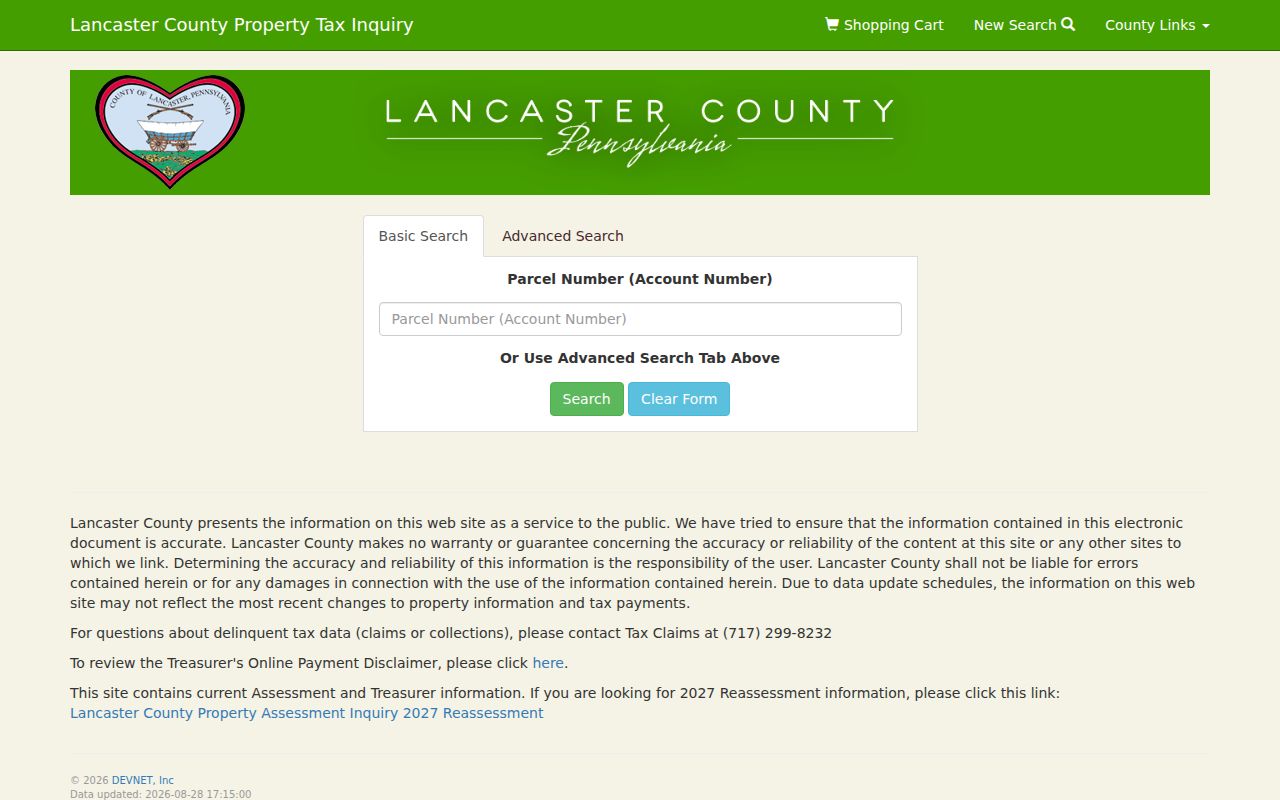
Preserve the parcel number and displayed update date before moving from this current administrative lead to a map or deed.
| Property query | Field available | Useful check |
|---|---|---|
| Known parcel | Parcel Number | Connects assessment and tax material. |
| Known owner | Owner Name | Try spelling variants. |
| Known place | House Number and Street Name | Use low/high numbers for a segment. |
| Time or building clue | Sale date, year built, square footage | Narrows broad results. |
Lancaster County Address Clues
Three labels can appear in one Lancaster County research trail. A situs address is the physical property location. A mailing address is where correspondence goes. A legal description identifies land in a recorded instrument. If street wording changes, the parcel number and legal description are stronger matching points than a familiar city name or postal label. This is especially important in a County where postal communities, boroughs, and townships can use different place names for nearby land.
- Parcel
- A County assessment unit that connects a property card, map, and tax material.
- Index
- A finding tool that points to a record; it is not always the original image.
- Roll
- A defined official listing, such as an assessment or voter record, with its own rules.
- Criss-cross directory
- An address-to-name section in some historic directories, not every edition.
Lancaster County Deed References
After the parcel stage, the Recorder's current search supplies recorded instrument information. For an older trail, historic Infodex reaches deeds from 1729 through 1980. Search as a guest, choose a name search, set a year or volume range and party role, then enter surname before first name. The index can show grantor or grantee, deed and recording dates, book or volume, page, and property location. Go To Document uses the book or volume and page to open an image.
Recording can lag execution. Check several ranges, spelling variations, and the Unrecorded Deed Index, which covers 1735 through 1985, before calling a link absent. A transfer party is not automatically a resident. A legal description, lot, tract, or book-and-page chain is needed before two similar street addresses are treated as the same land.
The Recorder public-search entry point shows the current system disclaimer before a user enters the index.
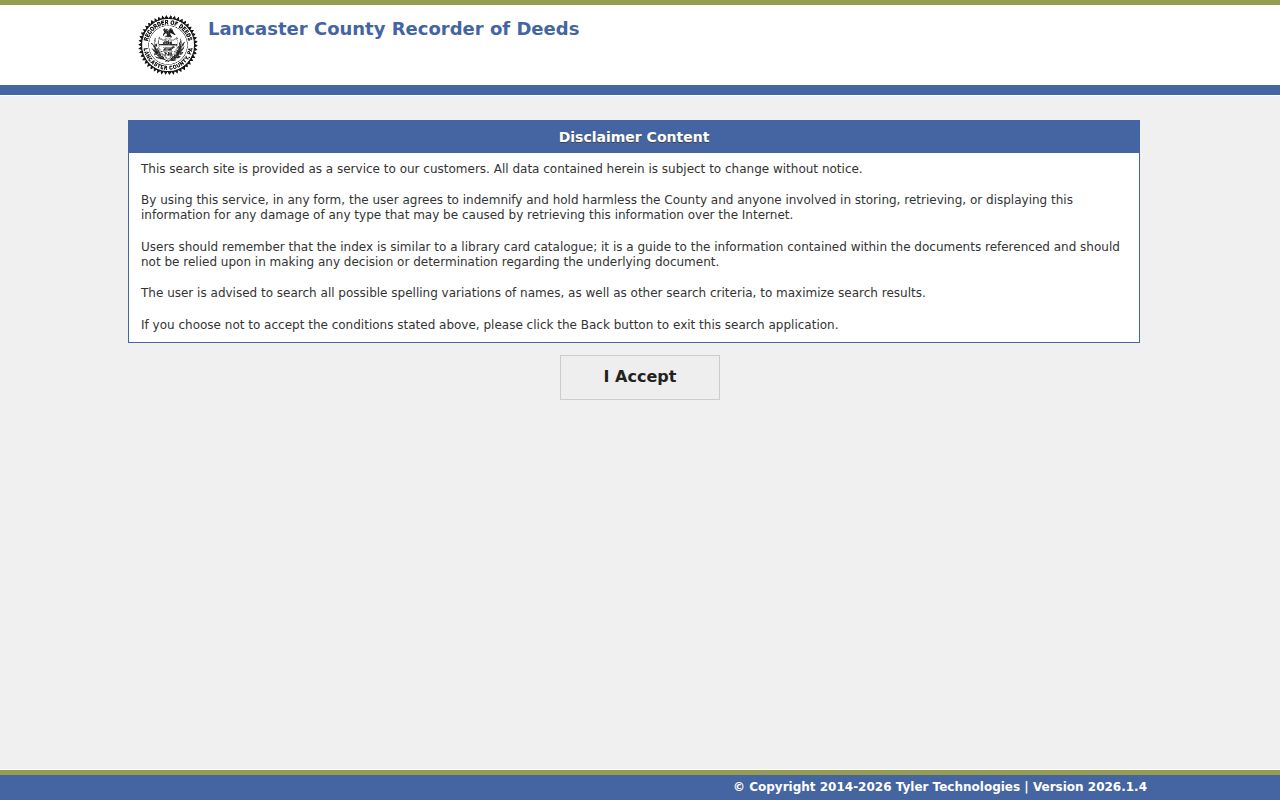
Keep the instrument number or book and page with the portal date. That citation is more durable than a recollection of a name search.
Lancaster County Docket Checks
A public case is a separate question from a resident search. The Pennsylvania Judiciary Web Portal can be narrowed with participant name, docket number, County, case status, and court filters. Its help recommends minimal participant criteria, then narrowing by Lancaster County and court level. Match court, docket, status, and case-date context before treating a result as connected to the person sought.
Public display can omit juvenile, sealed, expunged, limited-access, destroyed, or some civil material. The Clerk of Courts holds County criminal files. The Prothonotary handles civil and family matters, including older divorce work that generally needs Index Book Search before 1996. A docket points to the office for a file or certified copy; it does not settle identity alone.
The Pennsylvania Judiciary Web Portal begins the public docket route used for available Lancaster County matters.
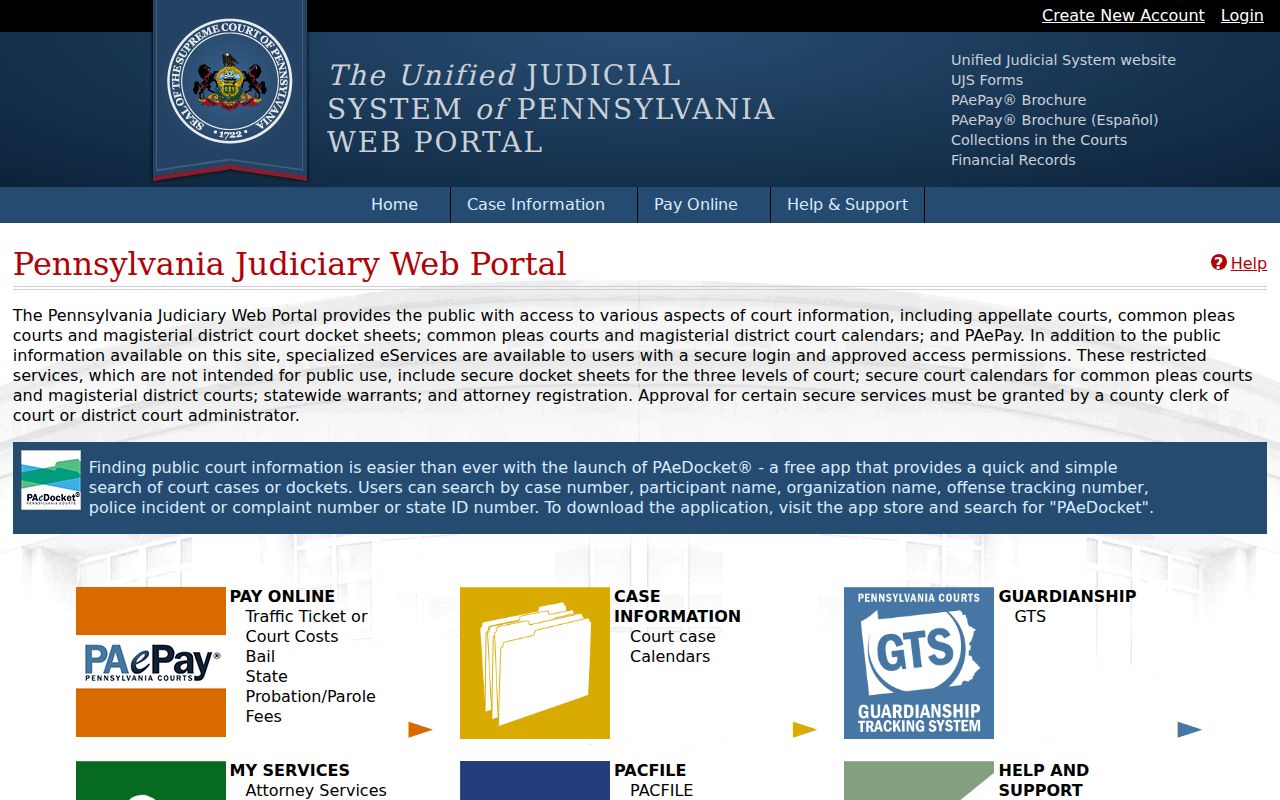
Use the resulting reference to contact the proper filing office rather than assuming every court record is present in one statewide display.
Note: A non-result means no public display was found, not that an event or person did not exist.
Current Lancaster County Rolls
Current directory-like sources are narrow by design. Assessment identifies an owner of record and parcel. The Recorder identifies parties to recorded documents. A voter channel covers registration under a controlled statutory process. Court portals identify parties to public matters, and the County jail page is limited to current custody. None is a complete household list. A useful Lancaster County residents directory search chooses the limited source that fits the question.
| Current source | What it establishes | Custodian | Access route |
|---|---|---|---|
| Assessment card | Owner of record, parcel, situs, mailing lead | Assessment | Free wEdge search |
| Recorded instrument | Document parties and dated land event | Recorder | Current portal or historic index |
| Registration status | Individual registration channel | State and County elections | Official status route or office |
| Public docket | Party and procedural trail | UJS and local court office | Portal then filing office |
| County jail notice | Current County custody information | County corrections | Online or phone route |
The County jail information page supplies a defined current-custody route. Its information is time-sensitive, and the County cautions users about improper or inaccurate disclosure.
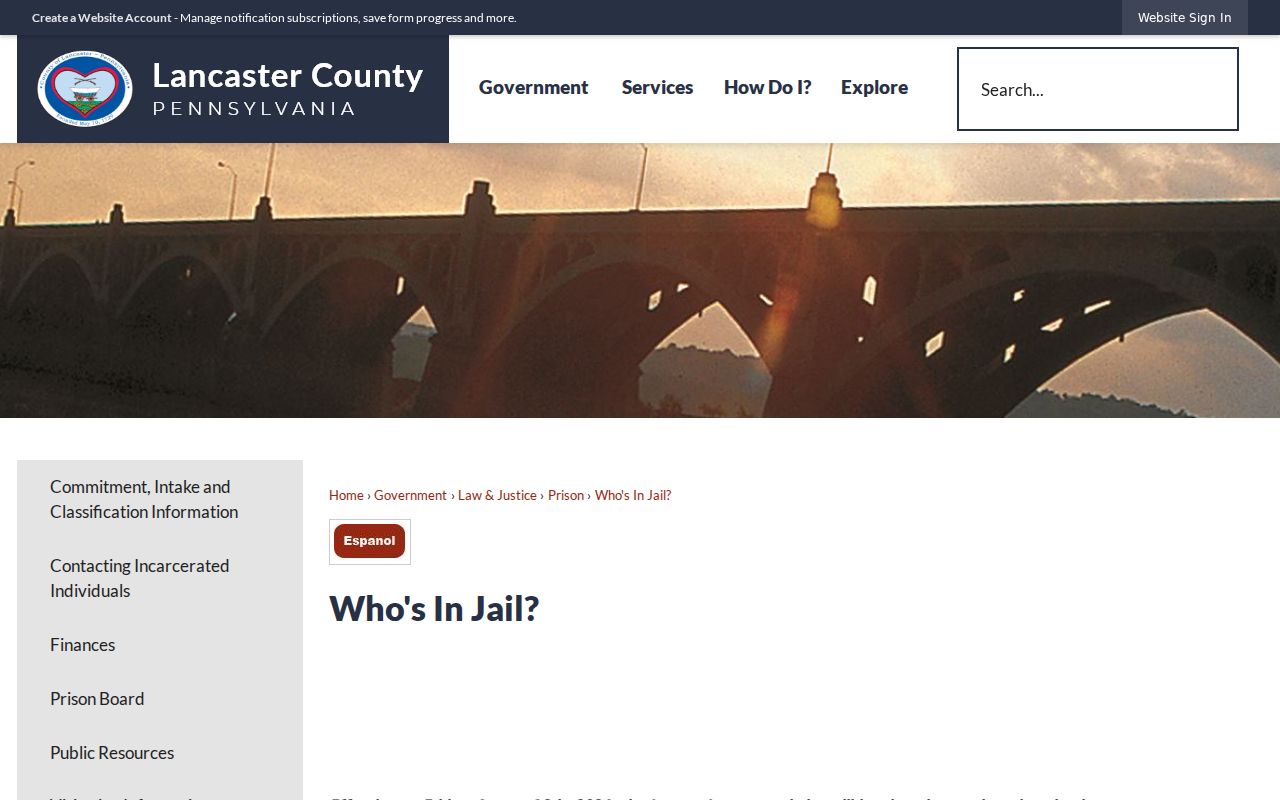
A custody notice is not a general identity tool and should never be repeated as a broad claim about someone.
Lancaster County Voter Access
Pennsylvania offers individual registration checking online, through the County voter-registration office, or by calling 1-877-VOTESPA. Lancaster County also furnishes street lists, but a street list is not an open web directory. State law allows a street and house-number arrangement while placing access conditions on the record.
Under 25 Pa.C.S. §§ 1403–1404, anyone acquiring or inspecting list data must provide identification and a written statement limiting use to elections, political activities, or law enforcement. The state request form describes electronic public information, street, walking, and full export lists for $20 per county. It also says list data may not be published on the internet. Registration data cannot establish every adult at an address or reveal ballot choices.
The official voter-status page is the individual channel; the inspected interactive form was protected by bot verification.
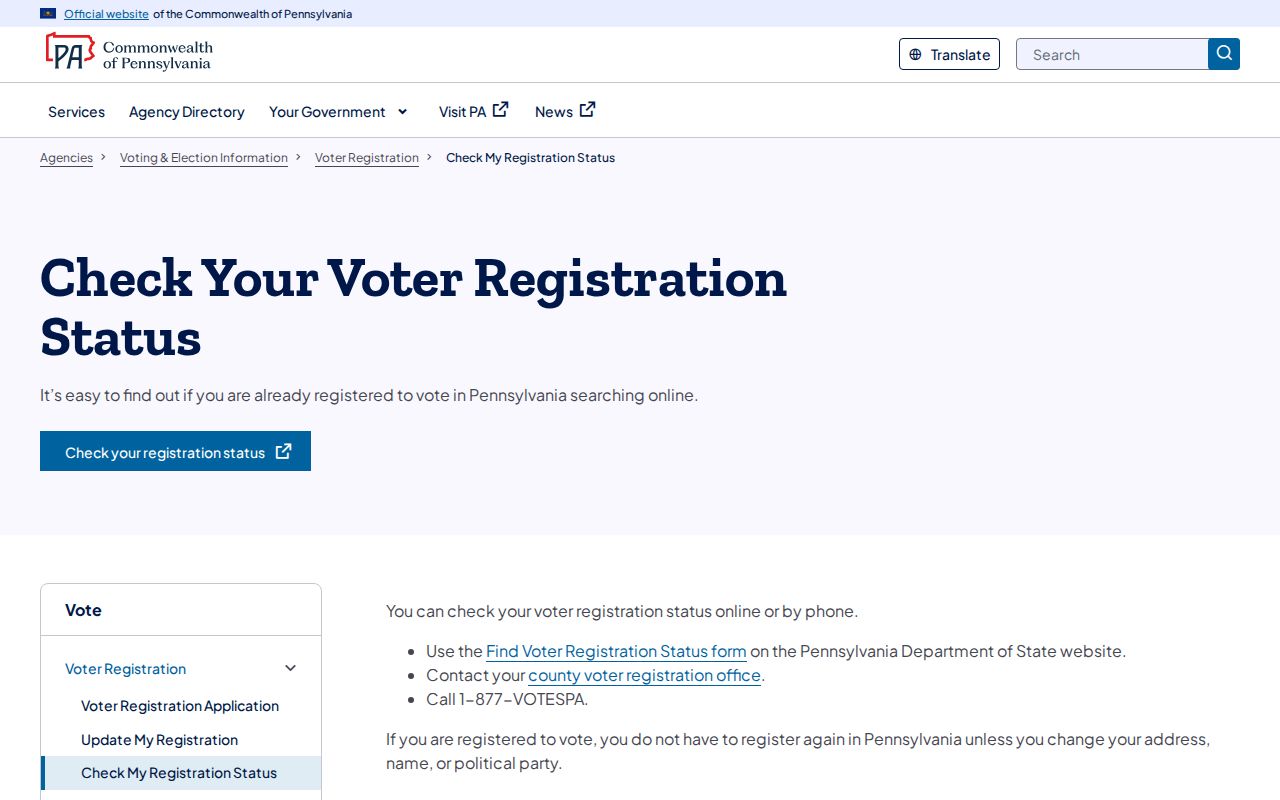
The County office remains the person-assisted fallback when the online form cannot be used.
Lancaster County Directory History
Earlier households have a rich local paper trail. LancasterHistory makes City and County directories searchable or browsable through POWER Library in three digitized groups: 1843–1900, 1901–1914, and 1914–1922. An entry can preserve a name, initials, address, occupation or business clue, and sometimes a spouse, widow, or boarding notation. It records a publication-period association, not title or present occupancy.
Use spelling variants and retain the edition year, page image, and abbreviations as printed. Lancaster Public Library adds City Directories, census microfilm from 1790 to 1930, newspapers, yearbooks, atlases, family histories, and selected church or cemetery material. The fuller historical collection method belongs on the Lancaster County Directory Book, while an address-to-parcel path belongs on the Lancaster County Street Directory.
The Lancaster Public Library Local History collection is an in-person route for matching a printed entry with a released census household.
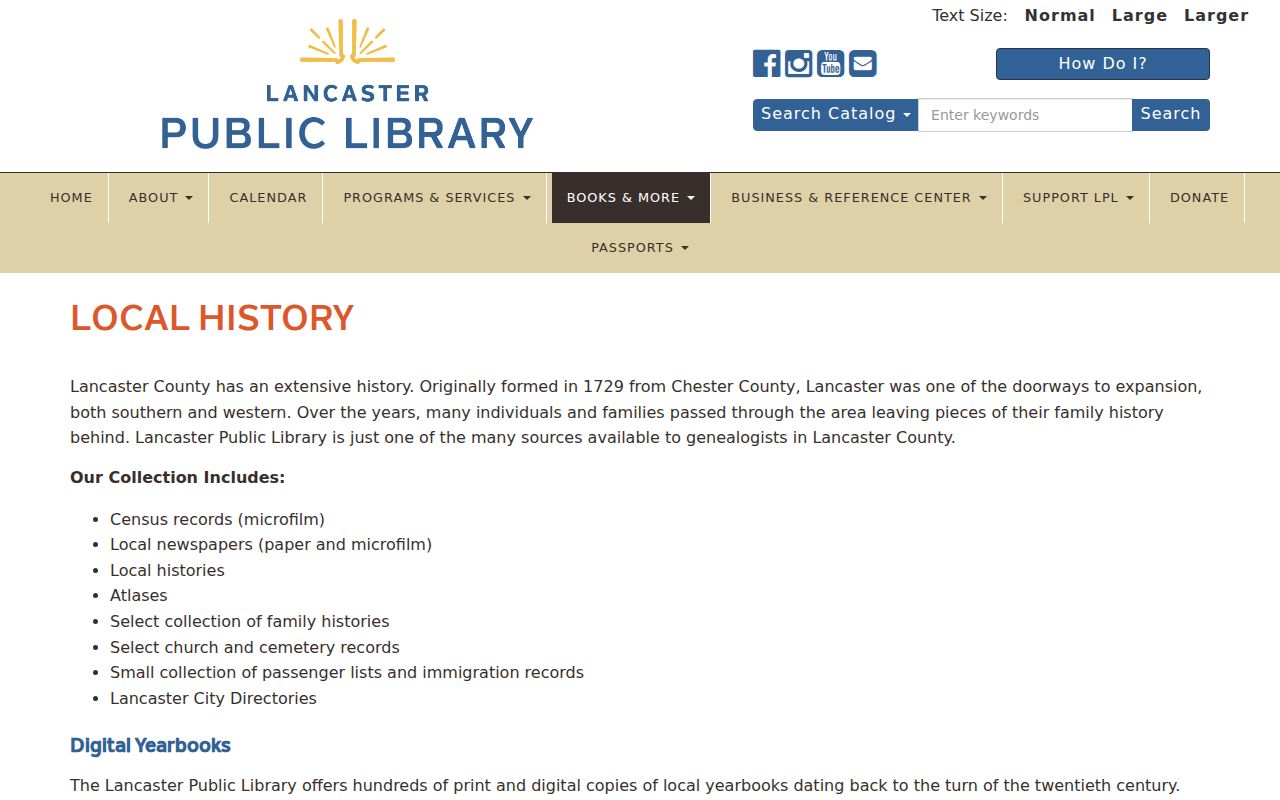
Pairing a directory with the nearest census helps separate people who share a name and places a printed address in time.
Lancaster County Archive Depth
Lancaster County formed on May 10, 1729, and its archives preserve a record trail unusually close to the County beginning. Deeds start in 1729, wills in 1730, intestate records in 1753, and naturalization papers begin in 1800. The first Penn Square courthouse burned in 1784, yet surviving series reach the founding era. A missing result should be tested against the Archives inventory, not explained by assuming the fire destroyed the record.
The historical map viewer helps when a modern street name, parcel shape, and earlier tract do not align. It overlays present parcels and roads with warrant-era and 1824, 1864, 1875, and 1899 mapping. That geography can resolve a location question before a researcher joins an old directory line to modern land. The Archives charges $5 for up to twenty electronic images or pages, then $0.50 for each additional image or page.
Note: Archive staff need a focused reference, name, date range, or series before they can check an index efficiently.
Lancaster County Vital Routes
Birth, death, marriage, and divorce records do not share one counter. Pennsylvania Vital Records handles current birth and death certificates, while the State Archives supplies public historical material after the statutory periods. Birth certificates become public 105 years after birth, and death certificates become public 50 years after death. Lancaster County marriage licenses and divorce filings remain with their respective County offices.
For archival certificates, the State Archives has original births for 1906–1920 and deaths for 1906–1975. Its noncertified request route costs $5 per certificate. Current certified copies have eligibility and identity requirements. For County marriage copies, use the issuing County, and for a Lancaster divorce use the Prothonotary route. Each is a defined event record, not a free-form residents directory search.
Lancaster County Request Limits
When a record is not online, the Pennsylvania Right-to-Know Law can provide a request route to the agency holding an existing public record. Act 3 of 2008, 65 P.S. §§ 67.101–67.3104, requires a covered agency to accept the standard form, but it does not require that office to create a new list, compile data, or reformat a record. Ask for an address, date range, and record type, and state whether inspection, copies, or certification is wanted.
A normal agency response is due in five business days, with statutory extensions possible. Protected material may be redacted while segregable public portions are released. The Pennsylvania RTKL request form shows the state request controls.
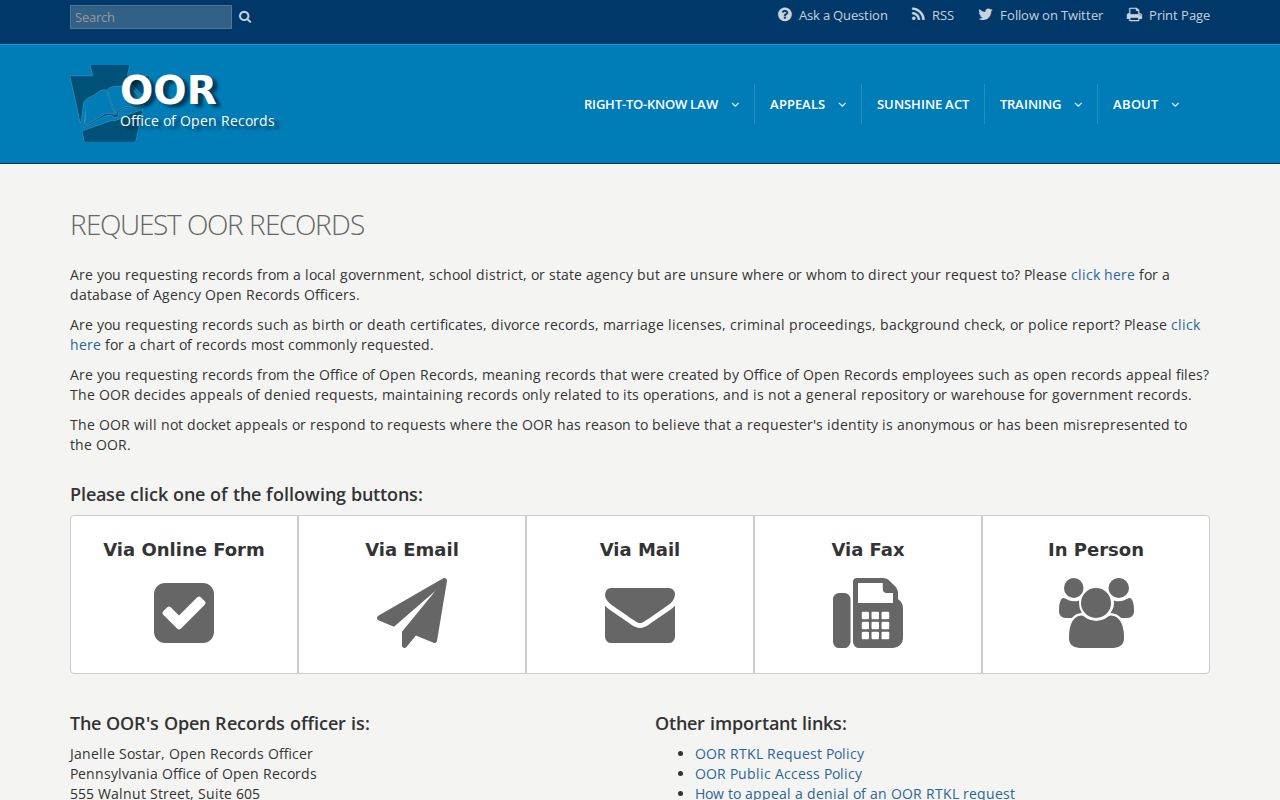
Use an archival paid-copy route when Archives supplies one rather than asking an office to make a new historical compilation.
Lancaster County Fraud Alerts
Recorded-property research can help an owner spot an unexpected transfer. Lancaster Recorder's Fraud Notify lets a person create and verify an account, add a name last-name-first, refine an alert, and receive email confirmation when a matching document records. It is an alert system, not proof that a document is valid or a substitute for reading the instrument.
Pennsylvania's 2026 warnings about deceptive deed transfers and impersonated County Sheriff calls give the same practical rule: use a number from an official office page, not a caller's message. Recorder copies are posted at $0.25 per page and certifications at $10, useful comparison points when an unsolicited seller claims to offer an urgent official deed copy.
The Pennsylvania Megan's Law public-protection search has separate acceptance conditions before its area and ZIP search options appear.
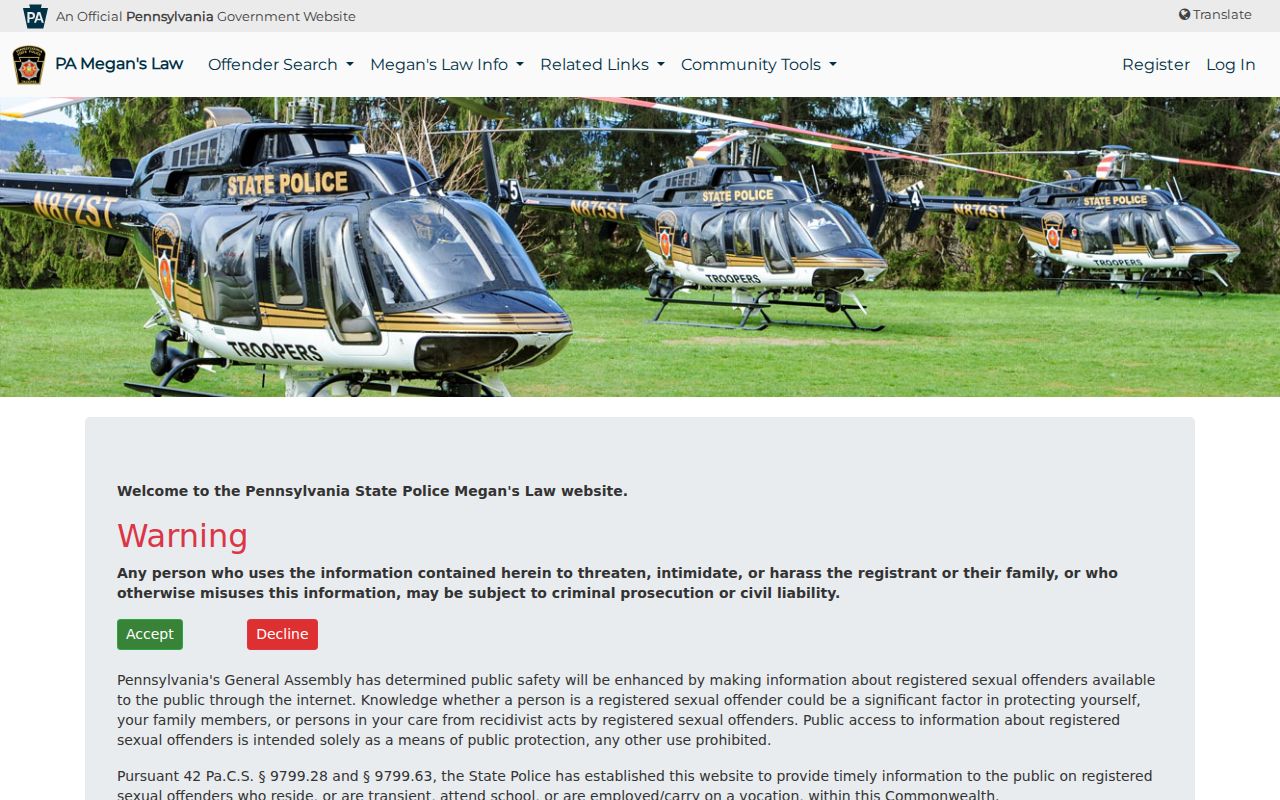
That registry is a public-protection resource with stated limits, not a general neighborhood or identity directory.
Lancaster County Search Dates
County systems change. The Recorder moved to Eagle/Tyler cloud recording in May 2024, while historic Infodex remains the route for older deed volumes. The Assessment Office is preparing a 2027 reassessment, and current assessment data should be labeled by the displayed year rather than treated as title or occupancy evidence. Archives has continued indexing and scan-on-demand work, so an earlier unsuccessful catalog search can be worth repeating.
A 2025 County report described 173,289 County documents indexed, 861 PDF scans added, and a move to PastPerfect Public Access. Those projects do not make every item online, but they explain why a search that failed before a catalogue update may deserve another focused attempt.
Save the URL, search date, page or instrument reference, and wording as it appeared. That simple record makes it easier to find a correction, explain a mismatch, or return to the right Lancaster County custodian when a portal updates.