
Lancaster County Directory Collections
The strongest online starting point is the LancasterHistory group of searchable and browsable Lancaster City and County volumes. Its digitized directory shelf is divided into three runs: 1843–1900, 1901–1914, and 1914–1922. The groups are useful because a name search can lead to a page image, while browsing preserves the page sequence and the edition’s own abbreviations. Later printed examples exist in local collections, but a catalog should confirm a particular year. A change in title or publisher does not automatically mean that the publication ceased to serve the same basic purpose.
| Collection | Years | Where Held | Access |
|---|---|---|---|
| Lancaster City & County directories | 1843–1900; 1901–1914; 1914–1922 | LancasterHistory via POWER Library | Search and browse online |
| Named early editions | 1843, 1857, 1863–64, 1868–69, 1883 | LancasterHistory and local collections | Use title and publisher clues in catalogs |
| Polk directories | 1907–08 and later printed examples | LancasterHistory and library catalogs | Confirm the needed year in a catalog |
| Local History microfilm | 1790–1930 census; historic directories and newspapers | Lancaster Public Library Local History | In-library microfilm and reference support |
A city directory is a dated publication, not a complete roll of every County resident. Rural households, short stays, and people omitted by the publisher may be absent. Keep the collection name, edition year, page image, and date searched with every transcription. Those details make an apparent gap easier to revisit.
Lancaster County Digitized Directory Runs
LancasterHistory’s digitized directory collection at POWER Library places the historic runs in a searchable, browseable format. OCR can point to a likely page, but the image remains the record to read. Search initials, surname variants, and business names, then inspect the page around the result. A commercial section can identify a firm, proprietor, trade, and address, while a residential line may carry a different type of detail.
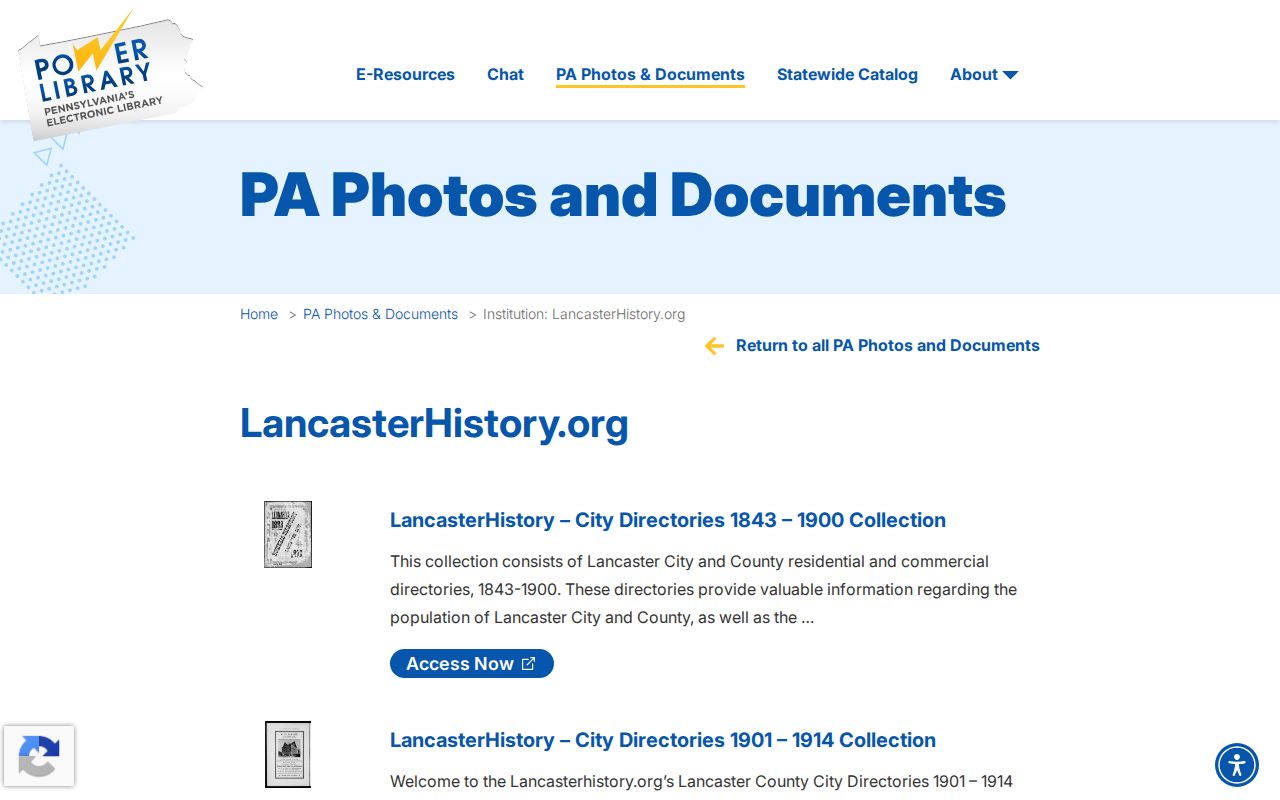
The collection landing page is a practical route to the three online time groups. Record the directory edition before comparing one search result with another volume.
For years outside the digitized run, use the LancasterHistory catalog and local-library holdings as the next channel. The County Archives is another fallback when a directory entry supplies a name, date, or place that needs testing against a government record. Its staff can check stated indexed timeframes, rather than undertake an open-ended name hunt.
Lancaster County Publisher Timeline
Publisher names are useful finding aids. They help distinguish similarly titled books and explain why a catalog may file a later volume differently. The documented Lancaster County sequence begins with J. H. Bryson in 1843, followed by William H. Boyd in 1857, Gopsill in 1863–64, Webb & Fitzgerald in 1868–69, and A. C. Leonard in 1883. R. L. Polk & Co. appears in the 1907–08 period and in later printed examples. The publisher is a catalog clue, not proof that an entry concerns a different person.
- 1843: J. H. Bryson published the identified early County directory.
- 1857–1883: Boyd, Gopsill, Webb & Fitzgerald, and Leonard mark documented title and publisher changes.
- 1907–08: A Polk edition appears within the locally identified run.
- After 1922: Later printed examples survive, but exact availability belongs to the relevant catalog record.
Note: A changed imprint can help locate a volume without proving that the city directory coverage itself changed.
Reading a Lancaster County City Directory
A printed entry often packs several leads into one short line. It may give a surname, initials or a given name, an address, an occupation or business, and a spouse or widow clue. The meaning of a mark varies by edition, so copy the punctuation and abbreviations as printed. Do not silently update a street name or treat a home address as a place of work. The page image and its front matter are part of the evidence.
| Name | Surname with initials or given name, useful for separating same-named people. |
|---|---|
| Address | A home or business address association for that edition, not title to the property. |
| Trade or business | An occupation, employer, firm, proprietor, or business clue when printed. |
| Spouse or widow clue | An occasional notation that can help distinguish households across editions. |
| Page evidence | Edition year, image or page number, punctuation, and the original abbreviation. |
Look for the key or editorial matter near the beginning of the same volume before expanding a shorthand mark. An exact transcription lets a later researcher determine whether a difference is an initial, an editorial convention, or a genuinely different person.
- Criss-cross directory
- A street-order section, if that edition includes one, that moves from an address toward a printed occupant association.
- Householder index
- An index organized around the listed household or address, not a guarantee that every person at the place appears.
- Abbreviation key
- The edition’s guide to its own marks and shortened words, which should be read before interpreting an entry.
Lancaster County Library Research Shelf
Lancaster Public Library Local History complements the digitized shelf with city directories, selected County newspapers and magazines, local histories, atlases, family histories, church and cemetery material, passenger resources, and federal-census microfilm from 1790 through 1930. Its more than 400 printed yearbooks from over 35 local schools are another dated community source. These materials are bounded local-history collections, so a blank search does not establish that a person was absent from the County.
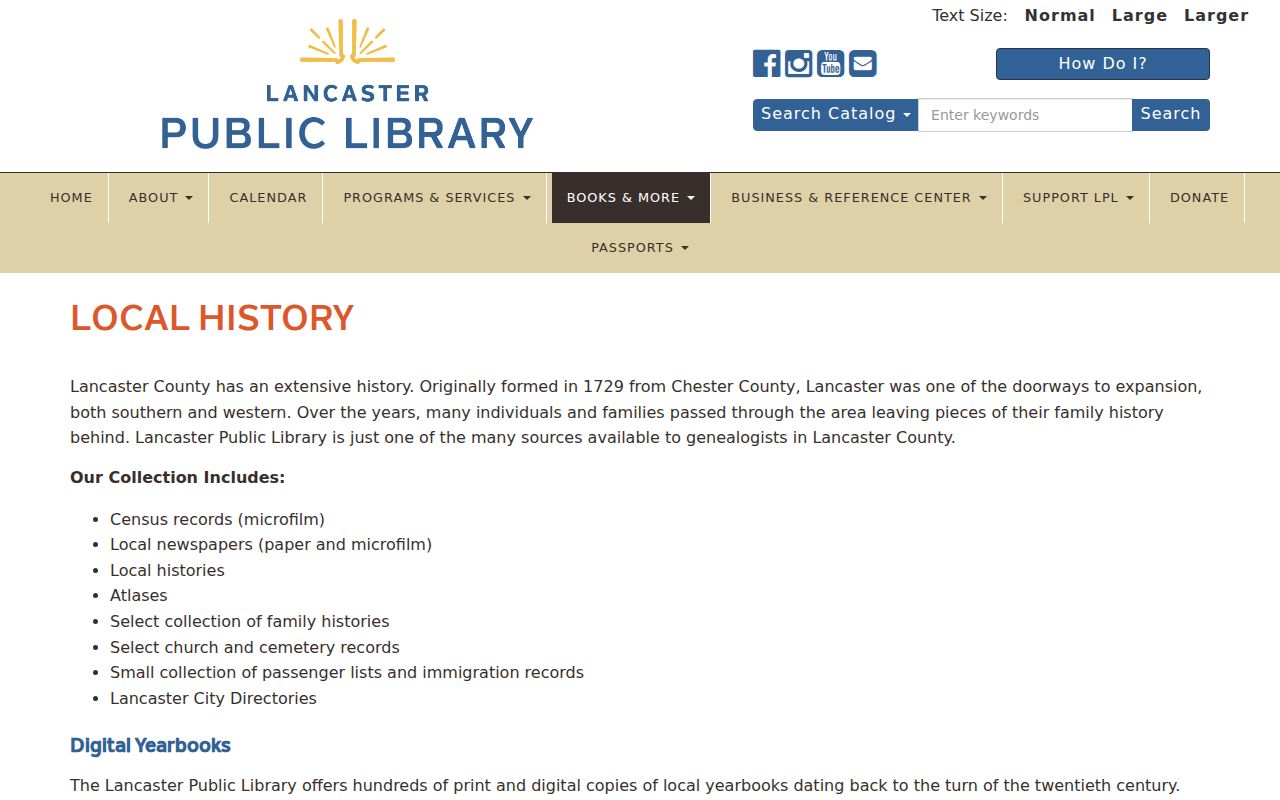
The Local History collection gives a physical research channel when OCR, an online run, or a catalog entry is not enough. A staff-assisted microfilm check can pair a directory line with a newspaper date or released census household.
Tracing Lancaster County City Directories
Household tracing works best one edition at a time. Start with a name or street tied to a known deed, probate record, census, or parcel. Copy the closest entry exactly, then open the preceding and following editions. Compare initials, spouse clues, business details, and the street number rather than relying on a surname alone. A disappearance can reflect a move, a death, an omission, or a changed listing style. It is not enough by itself to identify the reason.
- Choose the nearest directory edition to the known time point and preserve the page image.
- Copy the address, occupation or business, initials, and any spouse or widow notation exactly as printed.
- Check the editions immediately before and after, looking for a consistent household pattern rather than a surname match alone.
- When the address changes, compare the old and new streets with historic maps before assuming the modern number identifies the same lot.
- Pair the directory period with the nearest released census, then test an estate file, death record, or newspaper notice when the household changes.
- Use a deed trail to test ownership because a directory association is not title.
When a historical line needs a current address check, the address-focused records are handled on the Lancaster County street directory page. Keep that modern parcel work separate from a printed directory’s period-specific association.
Lancaster County Maps and Census
Released federal census schedules provide the household test that a directory alone cannot. Lancaster Public Library’s microfilm covers 1790–1930, an unusually long companion span for the 1843–1922 digitized directory series. Use the closest census to check household composition and timing. This can distinguish two people with the same name, or show that a boarder and a household head should not be treated as the same role.
Map context matters when addresses shift. LancasterHistory holds warrant maps, City and County maps, and Sanborn maps. The County historical map viewer overlays present parcels and roads on warrant-era, 1824, 1864, 1875, and 1899 mapping. Sanborn material identified for Lancaster County from 1912–1950 has 129 sheets and can show building footprint, material, and use, not the whole household.
Note: Compare a directory address to the map and census date before connecting it to a modern parcel.
Lancaster County Context Records
LancasterHistory’s Research Center holds a 16,000-volume library, more than 600 manuscript groups, maps, church records, newspapers, and digitized historic images. It is especially helpful after the directory work has identified a household, institution, church, block, or event date. Its online catalog and finding aids provide a sensible first check, and collection help is available at research@lancasterhistory.org.
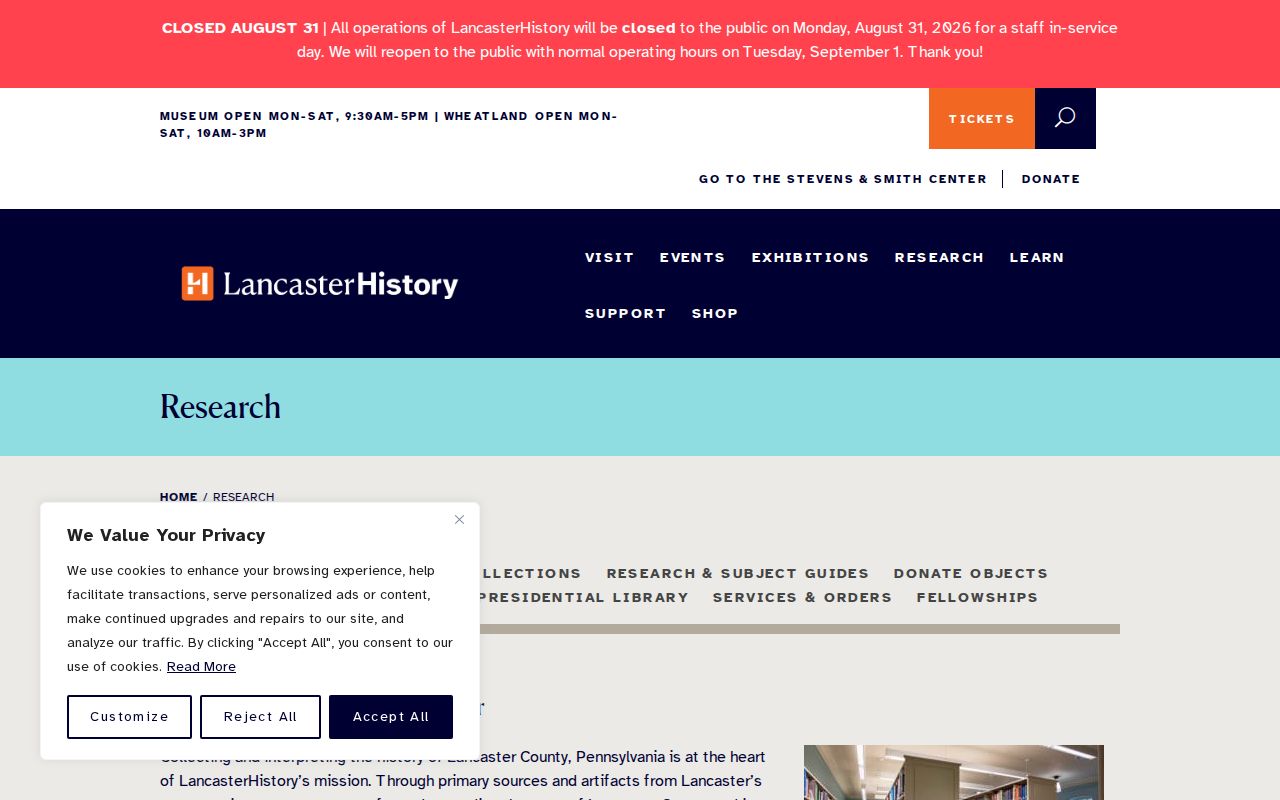
The Research Center adds map, newspaper, and church-record context to a dated directory finding. Those sources can support a historical narrative, but each should retain its own date, creator, and purpose.
The County Archives supplies the government-record layer. It preserves deeds from 1729, wills from 1730, and naturalization materials beginning in 1800, among other series. An original paper may contain a signature, but archives records are cataloged at the record-series level, so a specific reference is more useful than a broad request.
Lancaster County Archives has nearly 500 record series, and the office that created a record still matters when a directory lead reaches a court, probate, property, or naturalization source. Use the online historical indexes, the public computers in the research room, or a focused request to archives@lancastercountypa.gov. Electronic copies cost $5 for up to 20 images or pages, then $0.50 each. Give the name, date range, series, and page or book reference when known. The Archives can check a stated indexed timeframe, but it does not replace a careful, source-specific research trail.
Lancaster County Directory Limits
City directories are strong historical association evidence, but they do not establish title, every occupant, or the status of a present address. A reverse or criss-cross section may not appear in every edition and may omit numbers. Streets can also be difficult to reconcile across time. No researched Countywide street-renumbering chronology was found, so a mismatch should be treated as a map and legal-description question rather than as proof that a number continued unchanged.
Use the printed evidence for family and local-history research, and respect the limits of each record type. A name, address, or newspaper notice should never be used to harass or track a living person. For a disputed property boundary or title question, the controlling sources are the deed’s legal description and appropriate professional review, not a directory line.