
Lancaster County Resident Lookup Records
A careful resident lookup starts with the question being answered. The Lancaster County Property Tax Inquiry can connect an owner name, parcel, or street address to an assessment card. The Recorder can confirm a party to a recorded instrument. The Pennsylvania Judiciary Web Portal can show a public docket trail. Vital, marriage, probate, voter, license, and business sources have different custodians and limits. None is a single master list of everyone at an address, so compare the field that each source actually controls.
| Record | What It Confirms | Where | Access |
|---|---|---|---|
| Assessment card | Owner of record, parcel, situs, sale and structure clues | Lancaster County Property Tax Inquiry | Free current display; updates can lag |
| Recorded instrument | Party to a deed or other recorded document | Recorder public records search | Current portal and historic deed indexes |
| Public docket | Case or docket identity, court, county, status, participant, and calendar context | Pennsylvania Judiciary Web Portal | Public docket display; file comes from its custodian |
| Vital or county family record | Event or filing within the relevant record system | Pennsylvania Vital Records and county offices | Public-year and eligibility limits apply |
| Election record | Registration status or controlled voter-list category | Check My Registration Status | Individual service and regulated list process |
Start with the least invasive record that answers the question. A property-interest question belongs with wEdge and the Recorder. A public case question belongs with UJS and, if needed, the Clerk of Courts or Prothonotary. A marriage, estate, birth, or death question belongs with the office that created the record. That order keeps a Lancaster County resident lookup tied to a real record purpose rather than a name alone.
Begin With Lancaster County Owner Records
Use the County assessment display for an owner-of-record lead, not an assumption about who is present at the site. wEdge accepts a parcel or account number, owner name, house-number range, street name, sale-price range, sale-date range, year-built range, and square-footage range. Record the parcel identifier, situs address, owner formatting, and query date. The system separates a parcel situs from a correspondence or mailing address, and either one can differ from a person’s actual location.
LanCo View can then check whether the parcel fits the expected road and municipality, while the Recorder can connect the owner to a deed party and date. A deed is evidence of a conveyance or recorded instrument. It is not an occupancy record. When the question shifts from one person to other addresses on a road, use the more place-focused Lancaster County street directory workflow rather than turning an owner name into a household roster.
Note: Assessment information may lag a purchase or update, so retain the parcel reference when asking Assessment to correct a mailing entry.
Search Lancaster County Court Dockets
The Pennsylvania Judiciary Web Portal is the public entry for available docket sheets and calendars. For a name search, its guidance favors minimal participant criteria, then narrowing by Lancaster County, case status, or court. A docket number is stronger when it is known. PAeDocket also describes organization, offense-tracking, police-incident or complaint, and state-ID search routes. Use a court result as a procedural lead, then compare the court, docket number, and dates before associating it with a person.
The official statewide court portal shows the public search surface used for this Lancaster County resident lookup.
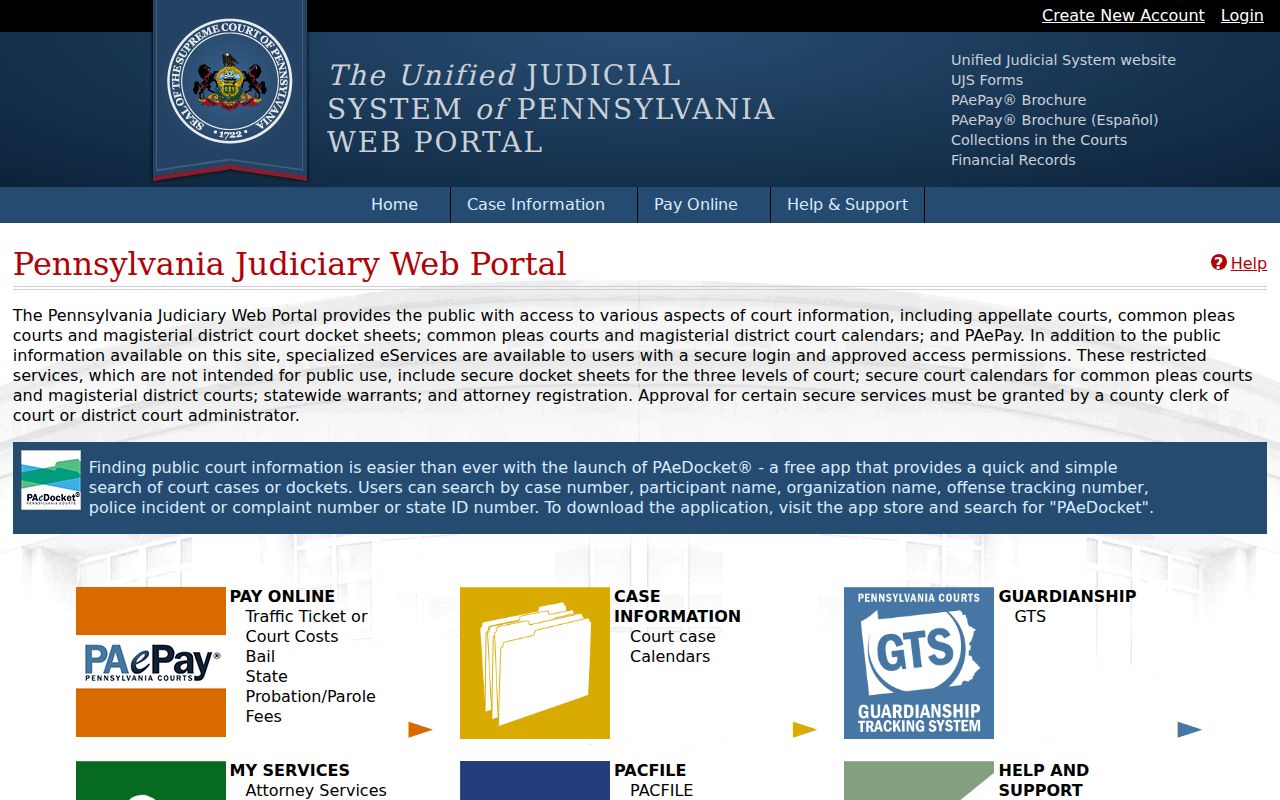
A public hit can identify a case or participant context, but it does not replace the underlying filing office or prove that two like-named parties are the same person.
| Participant Name | Use first and last name, then narrow with County when Lancaster is known. |
|---|---|
| Docket Number | A direct case identifier, especially helpful when the name is common. |
| County, Status, Court | Filters that separate Lancaster filings, court level, and procedural status. |
| Result context | Public results can identify the docket, court, county, participant, status, and calendar information. |
UJS may not display juvenile, sealed, limited-access, expunged or pending-expungement, destroyed, and some civil categories. A non-result only means no public display was found. Criminal files belong with the Clerk of Courts, civil and family files with the Prothonotary, and estates or guardianships with the Register of Wills or Archives as appropriate.
Verify a Lancaster County Resident
Verification requires two independent details that point in the same direction. A same-name trap is common in a county-wide search. Begin with an address or parcel clue when a property interest is relevant, then compare a deed party, court docket reference, dated directory entry, estate context, or vital-index event. Do not merge results just because they share a surname and town. Stop when dates, middle initials, municipality, or record references conflict.
- Search wEdge by the exact or variant owner name and preserve the parcel ID, situs, owner spelling, and query date.
- Use LanCo View to make sure the parcel matches the expected street and municipality, then use the Recorder for a party and document date.
- For a public court question, search UJS with the minimum participant name and Lancaster County filter. Capture the docket number and last event date.
- Ask the Clerk of Courts, Prothonotary, or Register of Wills for the relevant file or copy only after identifying the division and case or estate reference.
- Docket
- A court’s running record for one case, including its number, parties, court, status, and events that are public.
- Index versus image
- An index helps locate a record by name or reference. An image is the document view itself and may need a custodian request or an available portal image.
- Certified copy
- A copy issued and certified by the office that holds the record, when that office offers certification under its own rules.
Lancaster County Resident Vital Routes
Birth and death research splits between current certified records and historic public records. Pennsylvania’s Division of Vital Records handles post-1905 certificates through online, mail, and in-person channels. Birth certificates become public after 105 years and death certificates after 50 years; the State Archives is the historic route for its holdings and issues noncertified copies. A current certificate has eligibility and identification rules, so an index result does not authorize a certified copy.
The Pennsylvania birth-certificate application page shows the official request route and identity requirements.
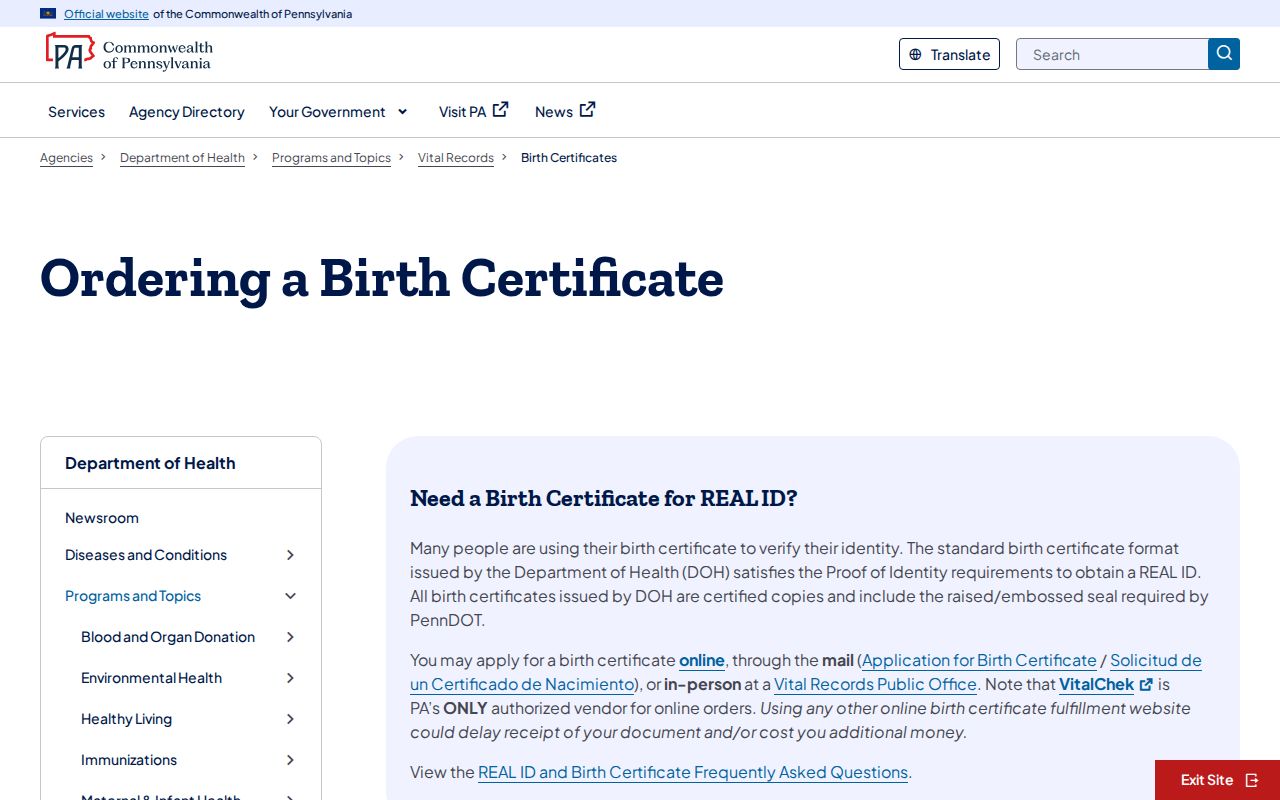
For archival birth or death research, use the State Archives request route with the name, event date, and certificate number when available. Lancaster County marriage licenses are county records, and a certified copy by mail is available only for a license issued in Lancaster County. Divorce records are court filings through the Prothonotary, not state vital certificates.
Respect Lancaster County Voter Boundaries
Pennsylvania’s official registration-status service supports an individual’s status inquiry. The live form was protected from automated inspection, so no unverified field list should be assumed. Lancaster County Voter Registration and Board of Elections is the person-assisted fallback, and the state voting helpline is another route. An individual voter inquiry and a County street list are not open-ended people-search tools.
The official voter-status landing page is the proper starting point for a person checking a Pennsylvania registration record.
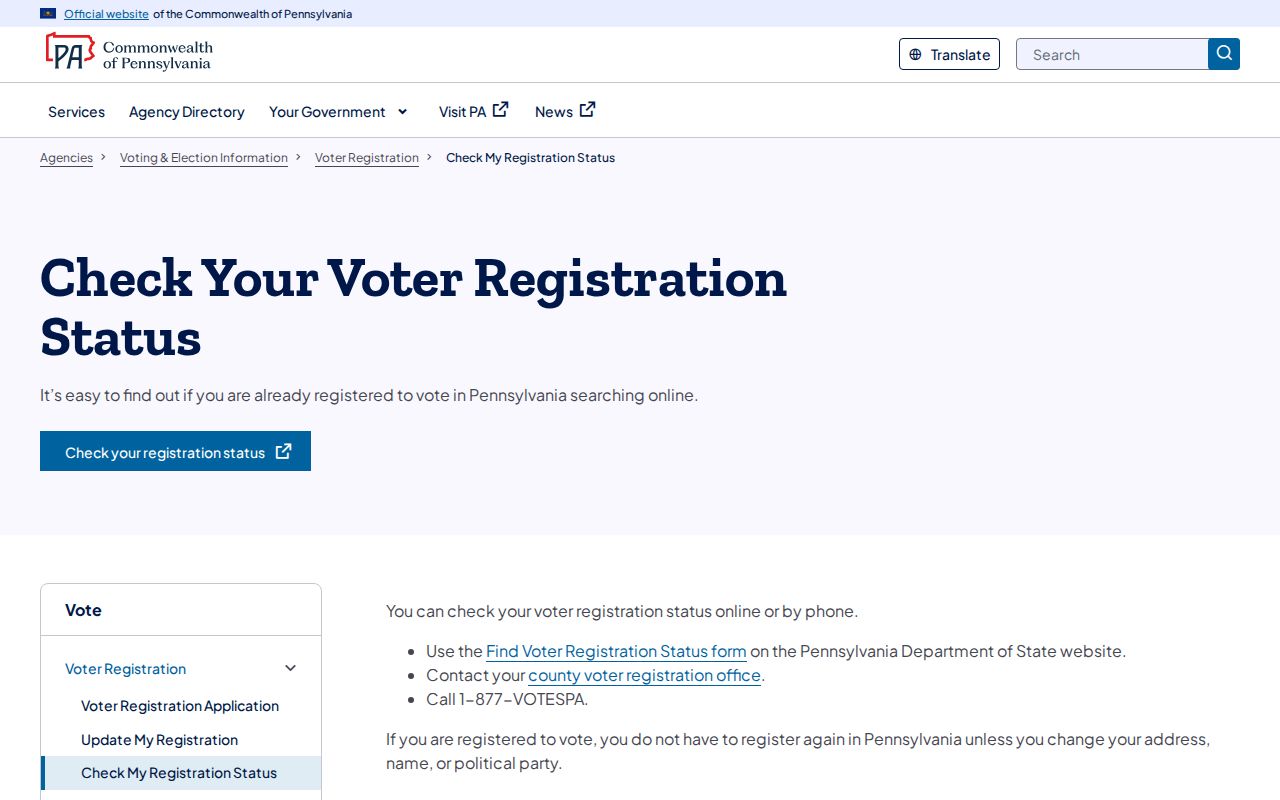
Pennsylvania street and voter lists are controlled by 25 Pa.C.S. §§ 1403–1404. A requester must provide identification and a signed permitted-use statement, and the state form prohibits internet publication. Those records can describe a legally permitted registration category or election participation history, never a ballot choice or a full household roster.
Request Existing Lancaster County Records
When a needed local record is not in a published index, direct a defined request to the custodian. The Pennsylvania Right-to-Know Law, Act 3 of 2008, 65 P.S. §§ 67.101–67.3104, covers state and local agencies but does not require an agency to create, compile, or reformat a new resident list. Identify the existing record by address, date range, document type, or case reference. State whether inspection, ordinary copies, or a certified copy is needed and set a maximum charge.
The Pennsylvania RTKL request form illustrates the official request options.
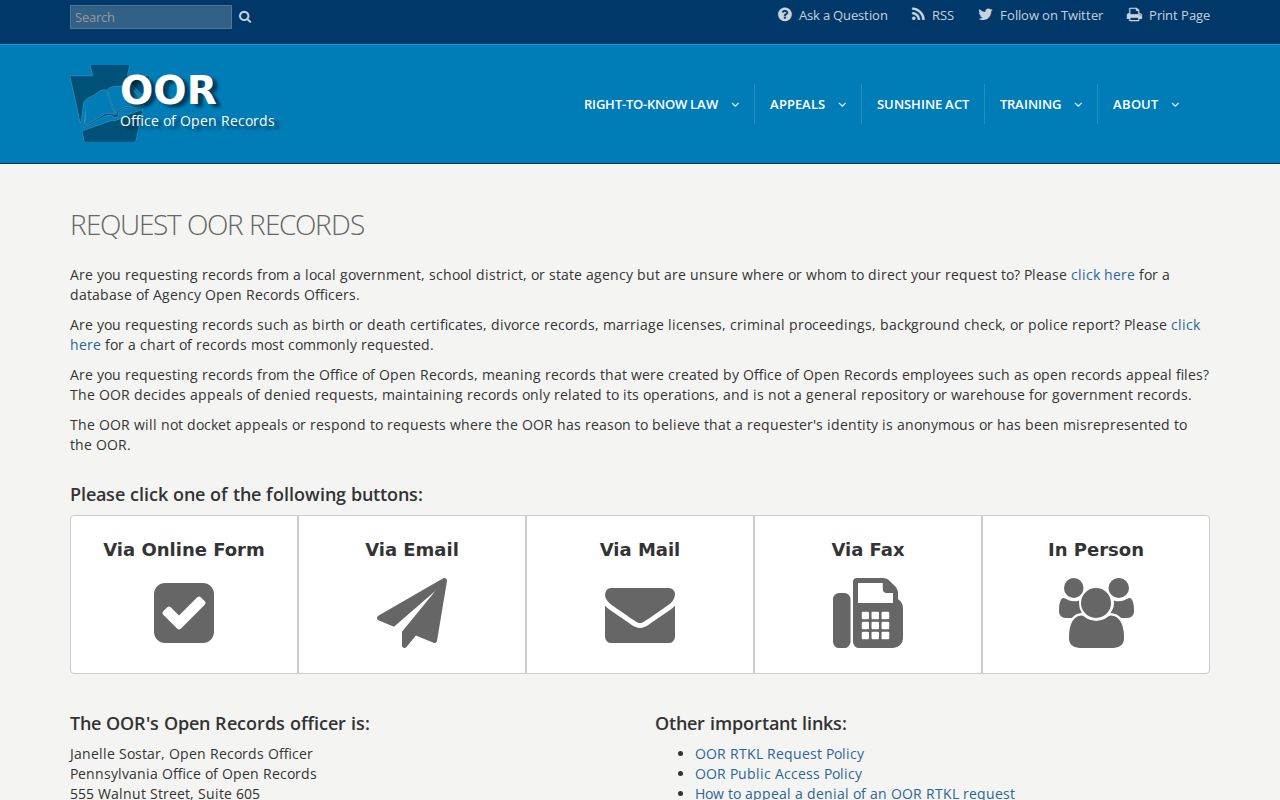
A normal RTKL response is due within five business days. An agency can issue an interim response and use the statutory extension process, generally up to 30 calendar days. Protected material must be redacted while segregable public portions are released. Use the Archives’ own paid-copy and reference process for archival series instead of asking it to conduct open-ended research.
Note: A clear reference, named custodian, and bounded date range make a Lancaster County request more useful than a request for a newly compiled people list.
Lancaster County Family Record Paths
For an heir question, begin with the Register of Wills or County Archives using a decedent’s name and approximate death date. Wills, estate files, inventories, accounts, and death affidavits can place interested parties in a dated estate context, although they do not prove current addresses. The Archives will check a stated indexed timeframe rather than perform open-ended research. Give the reference, name, date range, and record type in an email request.
Pennsylvania Adoption Information Registry, known as PAIR, is the official voluntary route for adoption medical and social history and authorized contact information. It is not a promise of contact. For a former classmate, Lancaster Public Library yearbooks offer an edition-specific school association, not a current resident listing. These paths help reconnect with history while keeping each source within the access rule that governs it.
Lancaster County Resident Lookup Limits
Protected addresses and private household data are not gaps to work around. Pennsylvania’s Address Confidentiality Program, 23 Pa.C.S. §§ 6701–6713, gives eligible participants a substitute address for specified government and other records, while the actual address remains confidential. Court restrictions, vital-record eligibility, voter-list rules, and the federal Driver’s Privacy Protection Act also set boundaries. A parcel mailing address, a business affiliation, and a license result each answer limited questions and do not establish present residence.
Lawful use. Use public records for personal, lawful research and keep protected information private. Pennsylvania harassment and stalking laws do not permit following, repeated contact, intimidation, or publication of a protected address.
If a public entry is wrong, contact the office that owns it. Assessment has a mailing-address correction route, while a Recorder item can be corrected only as the recorded instrument and law allow. RTKL requires redaction of protected content and release of segregable public portions; it does not create a general deletion right for historic publications or lawful records.